

Santa Monica Pier history begins with a practical public-works project: a pier built to carry a sewage outfall pipe beyond the breakers. The landmark took shape through the addition of a pleasure pier, changes to its original structure and a public campaign to save it from demolition.
- Santa Monica’s Municipal Pier officially opened on September 9, 1909.
- The present pier comprises the 1909 Municipal Pier and a southern pleasure pier built in 1916.
- The Looff Hippodrome and the pier are city landmarks.
- From a motel in Marina Del Rey, the pier is about 3.2 miles away.
Why was Santa Monica Pier built?
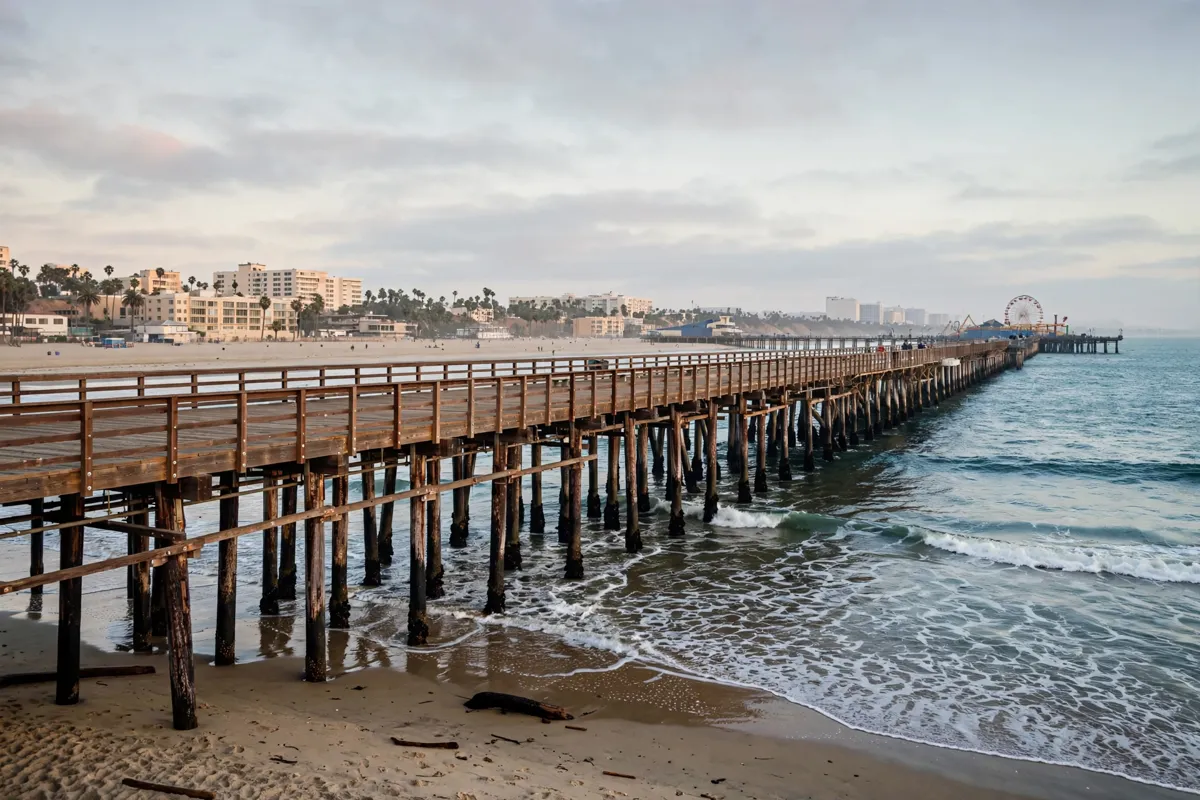
The Municipal Pier was built as a public utility to carry an outfall pipe beyond the breakers and discharge treated sewage into the ocean. The City of Santa Monica selected architect Edwin H. Warner’s design for the project.
Voters approved a $150,000 bond for the proposed pier on September 28, 1907. Construction began on April 8, 1908, under a contract awarded to the Stutzer Cement and Grading Company. The city declared September 9, 1909, its official opening day, after completion on August 18 with minor finishing work still to come.
The original design measured 1,600 feet and included an 18-inch outfall pipe running beneath the deck. As you look out from the shoreline, that engineering purpose is a striking starting point for the history of a place now associated with the waterfront and public attractions.
How did the pier change over time?
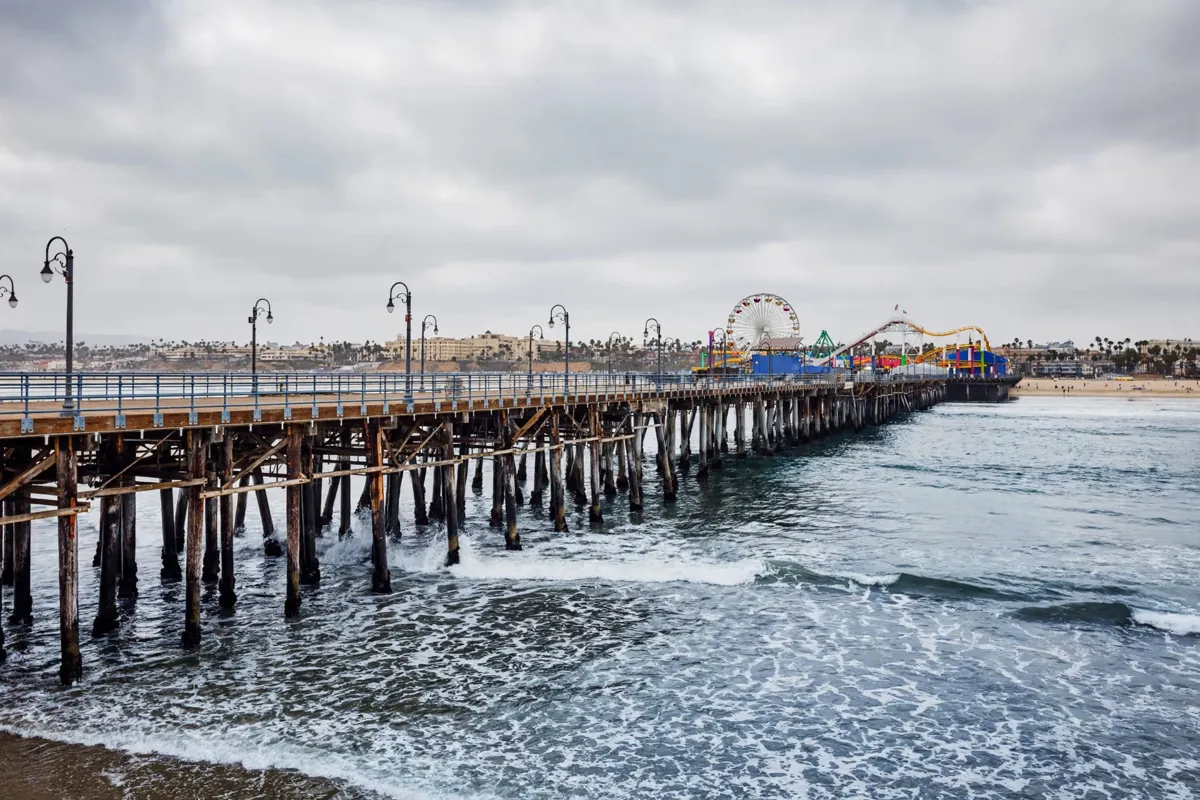
Santa Monica Pier changed from a single municipal structure into two adjoining piers, while its construction and uses shifted over time.
The experimental concrete construction of the Municipal Pier developed structural weakness. In 1921, it was rebuilt with timber, widened and extended to nearly 1,600 feet. A southern pleasure pier had already been built in 1916, giving the site a distinct entertainment role alongside its municipal origins.
The La Monica Ballroom was added at the pier’s west end in 1924, after the pier had been sold to another operator. A neon sign welcoming visitors was installed in 1941. These additions reflect how the waterfront site accumulated new public and entertainment features over the decades.
Before you set out, consider how the pier’s two structures reflect those different stages; the Santa Monica Pier visitor guide covers practical details for a first visit.
What did the amusement pier add?
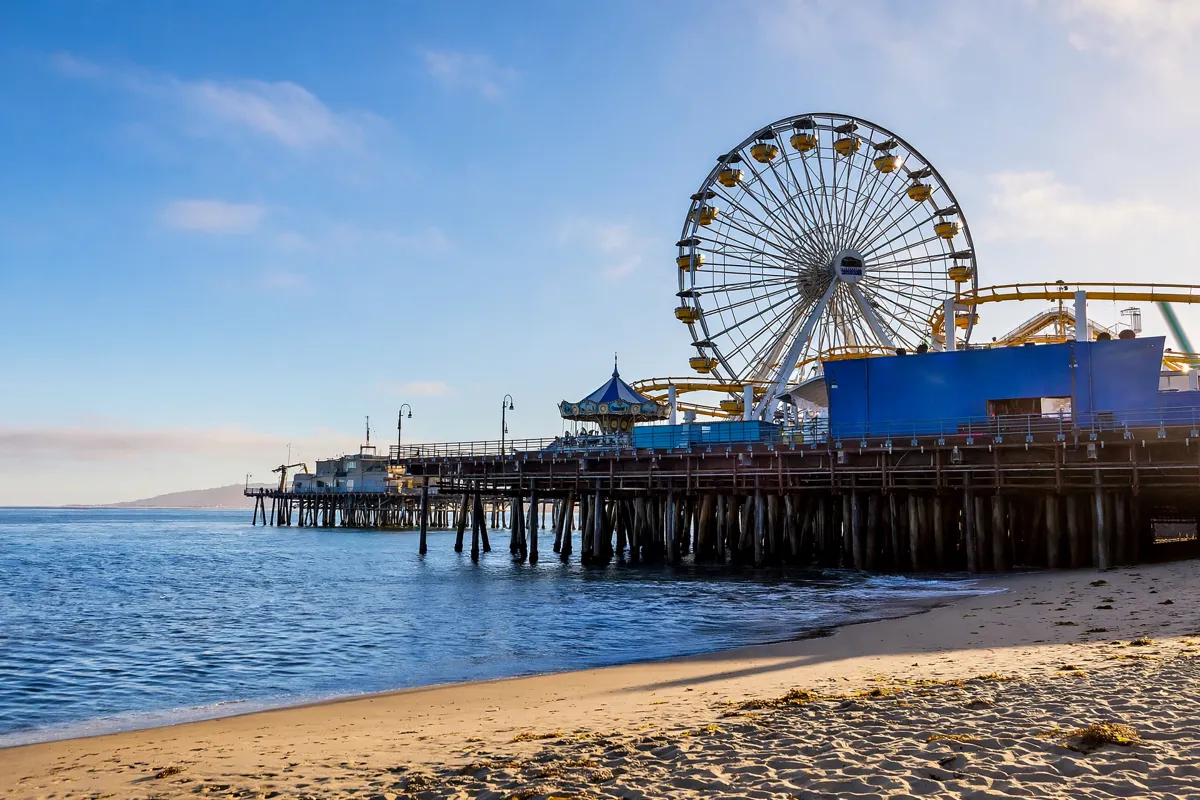
The southern pleasure pier added entertainment, including a carousel, roller coaster, bandstand, ballroom, bowling and billiards hall.
Amusement entrepreneur Charles Looff built the pier in 1916. Its Looff Hippodrome was built to house a carousel and remains on the pier; the carousel has 44 hand-carved horses. The City of Santa Monica identifies both the Hippodrome and Santa Monica Pier as landmarks, each designated on August 17, 1976.
More amusement-park rides opened on the pier in 1940. Today, the recognizable Ferris wheel at Pacific Park gives the pier a contemporary amusement-park presence, while the historic Hippodrome connects back to Looff’s original entertainment destination. When you visit, you can see how the amusement attractions sit alongside the older structure.
How was Santa Monica Pier preserved?
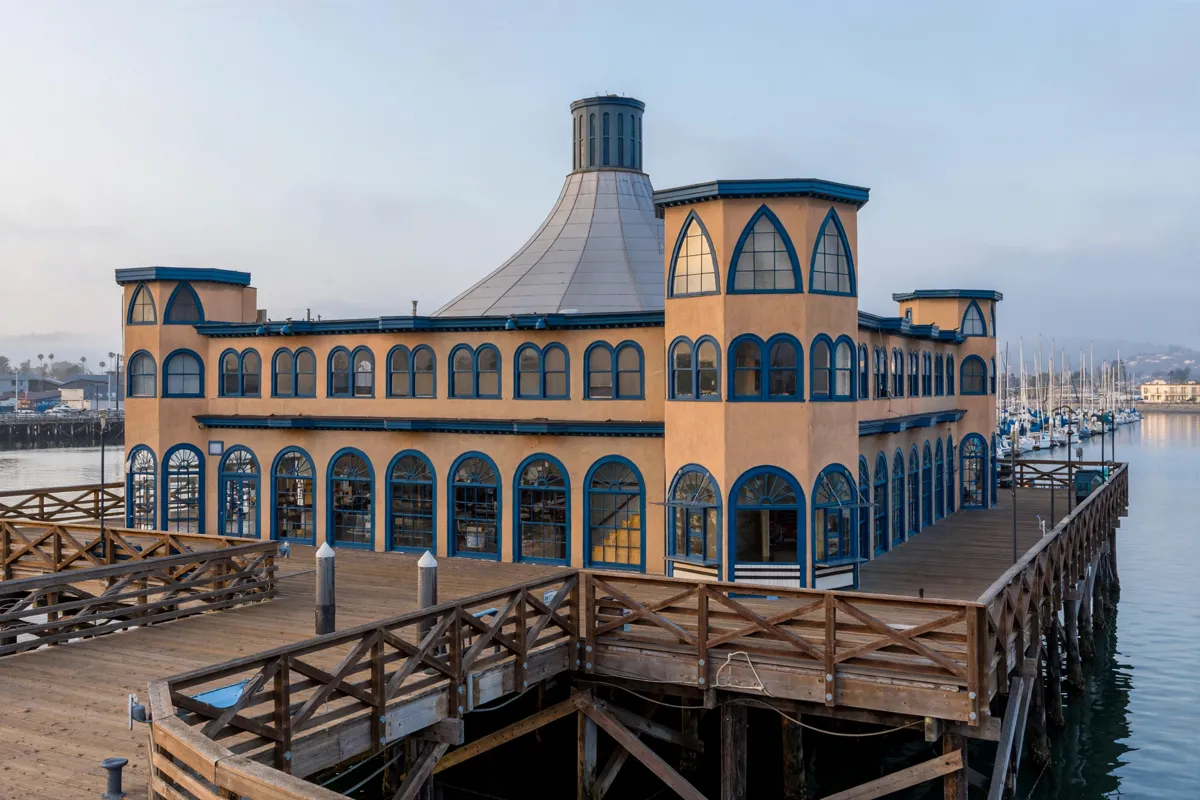
A citizens’ campaign helped save Santa Monica Pier from demolition in 1973 and led to the city’s first Landmarks Ordinance.
The pier faced demolition as part of redevelopment plans. The Santa Monica Conservancy says the campaign to save it helped bring about the ordinance, giving preservation a central place in the pier’s story.
City renovations in 1999 restored historic features and added artworks and monuments. Among them are the Millennium Wall near San Vicente Avenue and the Veterans Monument near Santa Monica Boulevard. As you walk along the pier, these additions show how restoration retained historic details while adding features to the public setting.
If you are driving, the Santa Monica Pier parking guide covers lots, access and arrival tips.
Which historic details can you look for on a visit?
The pier’s two adjoining structures, the Looff Hippodrome and its preserved features offer clear clues to its different stages of development.
Start by noticing that the Municipal Pier and the southern pleasure pier are separate structures with different origins. The Hippodrome, built in 1916 for a carousel, is one of the site’s enduring historic buildings. You can also look for the welcoming neon sign, installed in 1941, and the restored features and monuments from the 1999 renovations.
Before you go, check the official site for the City of Santa Monica’s current visitor information.
FAQs
When did Santa Monica Pier open?
Open daily. The Municipal Pier officially opened on September 9, 1909. The city had completed it on August 18, with minor finishing work remaining.
Why was the original Municipal Pier built?
It carried an outfall pipe beyond the breakers to discharge treated sewage into the ocean.
When was the Looff Hippodrome built?
The Looff Hippodrome was built in 1916 to house a carousel and remains on the pier.
Was Santa Monica Pier ever threatened with demolition?
Yes. The pier faced demolition in 1973 as part of redevelopment plans, but a citizens’ campaign helped save it.